Everywhere · Park safety
The Ultimate Guide to Park Safety for Parents
29 October 2026 · 8 min read

Practical park safety for family visits: general tips for every age, a playground equipment checklist, water and splash-pad precautions, and how to talk about stranger awareness without scaring kids — plus how ParkConnect helps you prep before you go.
Ready to put this checklist to work? outdoor parks near you on the map, filter by toilets and shade, then join the optional weekly challenge to visit one new playground at a time.
General Park Safety Tips for All Ages
Safety at the park starts before you leave home. Agree on a meeting point for bigger greens (fountain, gate, playground bench) so a wandering child knows where to return. Pack water, sunscreen, a hat, and a small first-aid kit; heat and scrapes are more common than drama. Dress kids in shoes with grip — wet slides and polished concrete are slippery — and skip drawstrings or scarves that can catch on equipment. Scan the space when you arrive: working gates, broken glass, standing water, dog-off-leash zones, and whether you can see the whole play area from one seat. Stay phone-aware but present; the biggest risk for toddlers is a silent exit through an open gate, not a stranger. For mixed ages, set clear zones — little kids on the fenced playground, older kids on the court — and a check-in time. Leave before dark if lighting is poor. After the visit, note toilets, shade, fencing, and hazards on the ParkConnect pin so the next family gets a clearer picture than a marketing photo.
Playground Equipment Safety Checklist
Walk the equipment once before kids climb. Look for stable platforms, intact handrails, and bolts that are not protruding. Surfacing under swings and slides should be soft enough — wood chips, rubber, or sand — not packed dirt with exposed roots. Check slides for cracks, metal that burns in midday sun, and exits that dump into a busy path. Swings need clear front-and-back space and seats that are not cracked. Climbing nets and ropes should be tight enough not to make large head-sized loops. Gaps between rails should not trap a child’s head or torso; if something looks like a squeeze point, skip that piece. Age labels on structures matter: a tall adventure tower designed for older kids is not a toddler park. Watch for hot metal in summer, icy steps in winter, and standing water after rain. If a structure is taped off or clearly damaged, move on and mark the pin so others know. ParkConnect community photos and recent reviews often show whether equipment looks maintained today — use them before you promise a favourite climb.
Water Safety Precautions in Parks
Ponds, lakes, fountains, and splash pads change the risk profile of an outing. Treat any open water as needing constant eyes-on: a toddler can move from the playground edge to a pond rim in seconds. Splash pads and water playgrounds feel safer but still need rules — no running on wet paving, sit when jets are strong, and leave when lips turn blue or kids are shivering. Confirm whether water features run on a timer or shut for maintenance; wet clothes in wind chill kids fast, so pack a towel and change of clothes. Lakes and river edges need clear boundaries: no unsupervised wading, life jackets for boat docks when required, and a hard stop if currents or drop-offs are unknown. Never assume another adult is watching your child at a crowded splash park. Alcohol and water do not mix for caregivers on duty. If a park lists water play on ParkConnect, read recent notes for depth, supervision culture, and whether toilets are close enough for post-splash changes. When in doubt, choose a dry playground with shade and save open water for days you can give undivided attention.
Teaching Children About Stranger Awareness in Public Spaces
Keep stranger awareness calm and specific — scare stories make kids freeze or hide instead of finding help. Teach a simple plan: stay where we can see each other; if we get separated, go to the meeting point or a staff member / parent with kids, not into a car or behind a building. Practice full names and a caregiver phone number when age-appropriate. Explain that most people at parks are helpful, but grown-ups should not ask children for secret help, gifts, or private photos. Role-play a polite “No, I need my grown-up” and walking back to you. For older kids who roam to a nearby court, set a radius and a check-in time rather than a vague “be careful.” Watch your own modeling: greet other parents, but do not force kids to hug strangers. If something feels off — an adult lingering without kids, pressure to leave the playground — trust that instinct, gather your children, and leave. ParkConnect is for facilities and community context, not a substitute for supervision; use reviews and photos to pick busier, well-kept parks when that helps you feel comfortable, then stay engaged while kids play.
Next step: outdoor parks near you on the map
Use the checklist above, then open ParkConnect’s map to outdoor parks near you near you — filter toilets, shade, and sports, read parent marks, and save the pin. When you want a simple habit, join the optional weekly challenge and visit one new playground at a time.
Parent tips
Set a meeting point as soon as you arrive at a big park.
Walk playground equipment once before the first climb.
Treat ponds, lakes, and splash pads as eyes-on water — always.
Pack towel and dry clothes for any water-play stop.
Practice a calm “find our meeting point / find a helper” plan, not scary stranger stories.
After the visit, mark hazards or great sight lines on the ParkConnect pin.
Frequently asked questions
- What are the most important park safety tips for parents?
- Supervise with a clear meeting point, check playground equipment and surfacing, stay eyes-on near any water, and keep phones from replacing attention. Dress for grip and weather, leave poorly lit parks before dark, and share what you find on the ParkConnect pin for the next family.
- How do I check if playground equipment is safe?
- Inspect for stable platforms, soft surfacing, intact swings and slides, tight ropes without large loops, and no protruding bolts or obvious damage. Skip taped-off or broken structures, watch for hot metal in summer, and read recent ParkConnect photos or notes before you go.
- How can I keep kids safe around park water and splash pads?
- Assume constant supervision at ponds, lakes, fountains, and splash pads. Ban running on wet paving, pack towels and dry clothes, know when jets shut off, and never rely on a crowd to watch your child. Choose dry playgrounds when you cannot give undivided water attention.
- How should I teach kids about strangers at the park?
- Use a calm plan: stay in sight, go to a meeting point or a helper with kids if separated, know your name and a phone number, and practice saying you need your grown-up. Avoid scare stories; set clear ranges for older kids and leave if a situation feels wrong.
Parent comments(0)
Share tips from this guide — splash status, toilets, busy times. Sign in with email to post.
No comments yet — be the first parent to share a tip on this guide.
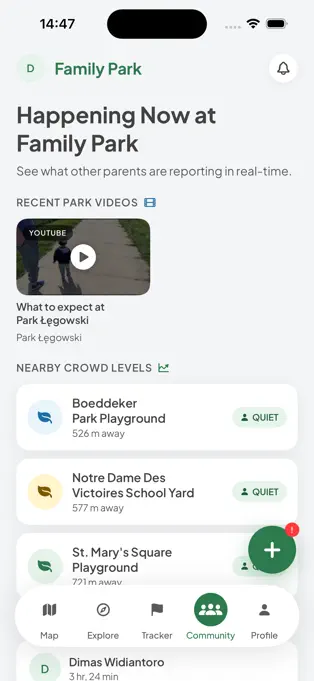
Family Park on iPhone
Take this park guide with you
Download Family Park for GPS nearby parks, toilet and facility tips on site, check-ins, and visit challenges while you are at the playground.